Camille Pissarro

Original Prints: Etchings


One of the founding fathers of impressionism, Camille Pissarro (1830 - 1903) was also the most devoted of the impressionists to printmaking.

In the span of nearly 40 years, he produced over two hundred works in the different media, with a clear predilection for etching.

Although he had constant difficulties in selling his etchings, and the most part were never even editioned in his lifetime, he delighted in elaborating a veritable cuisine of the various techniques, some of which he pioneered, in order to capture the subtle effects of light and atmosphere.

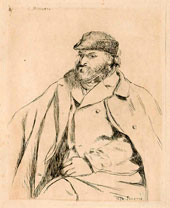
Camille Pissarro, Portrait de Cezanne, etching

Portrait de Cezanne

Portrait of Cezanne

Delteil 13, Leymarie & Melot 13

etching, 1874, only known state

In 1872, Cezanne settled at Auvers-sur-Oise, where he was to work closely with Pissarro, in a friendship evoked by this ruggedly skillful portrait.


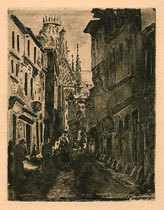
Camille Pissarro, Old Street in Rouen, etching

Vieille Rue à Rouen : Rue Malpalue

Old Street in Rouen: Rue Malpalue

Delteil 41, Leymarie & Melot 41

etching, 1883, the 2nd state (of two)

Late in 1883, Pissarro travelled to Rouen, inspiring a number of fine etchings of street scenes, this rare print being the very first of a delightful series.


Camille Pissarro, Place de la République, Rouen, etching

Place de la République à Rouen - Effet de pluie

Place de la République in Rouen - Rain Effect

Delteil 44, Leymarie & Melot 45

etching with aquatint, 1884, the 2nd state (of two)

As Pissarro developped the Rouen series, he experimented new textural techniques, here resulting in a quite impressionistic street scene with remarkable atmospheric effects.


Camille Pissarro, Rue Damiette, Rouen, etching

La Rue Damiette à Rouen

Rue Damiette in Rouen

Delteil 52, Leymarie & Melot 52

etching, 1884, the extremely rare 1st state (of two), before extensive reworking

Pissarro's later prints of the Rouen series show rich effects of acid wash, here throwing a narrow street of the old town into deep shade, with the cathedral towering in the background.


Camille Pissarro, Rue du Gros Horloge, Rouen, etching

Rue du Gros-Horloge à Rouen

Rue du Gros-Horloge in Rouen

Delteil 54, Leymarie & Melot 43

etching, 1885 (?), the 3rd state (of three)

Inspired by Bonington's renowned lithograph of a half century earlier, Pissarro's etching of the Rouen street scene is one of the classic views of the series.


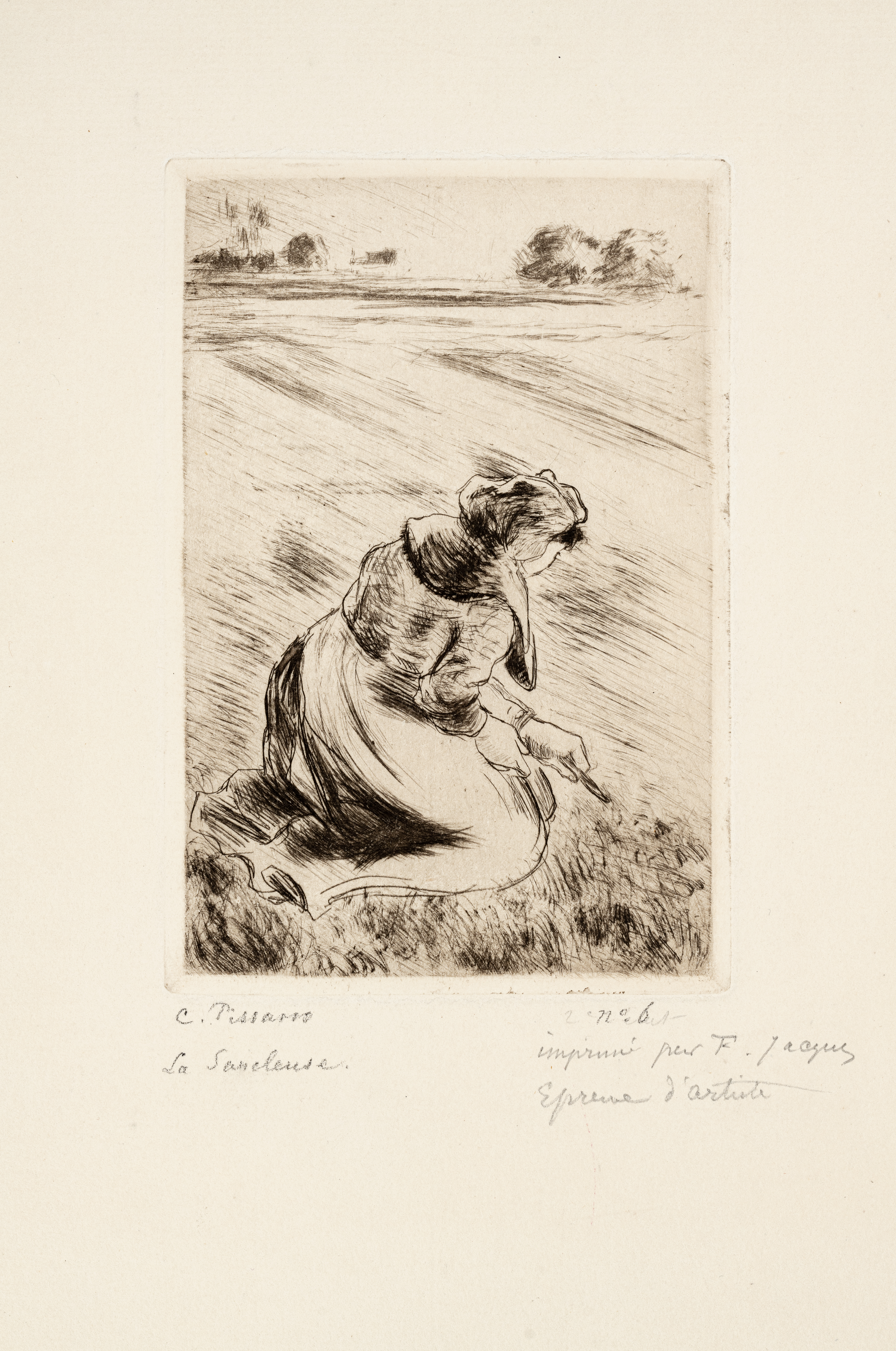
Camille Pissarro, Woman at the Gate, etching

Femme à la Barrière

Woman at the Gate

Delteil 84, Leymarie & Melot 83

etching, 1889, the definitive state (of ten?)

Pissarro often strove to capture everyday life in the country: this etching of a young peasant woman is one of his most appealing prints, which he reworked extensively.


Camille Pissarro, Peasant Women in a Bean Field, etching

Paysannes dans un Champ de Haricots

Peasant Women in a Bean Field

Delteil 103, Leymarie & Melot 101

etching, 1891, only known state

Pissarro's etchings of the 1890s were almost all devoted to the working women of the countryside, evoking a whole range of everyday activites, here one of the largest and more refined examples of his late printmaking.

       next artist  >